Sunday, September 20, 2015

Healing the Traumas of our Ancestors


I'm currently reading two books by Thich Naht Hahn. One is called, Fear: Essential Wisdom for Getting Through the Storm, and the other is No Mud, No Lotus: The Art of Transforming Suffering. The books are quite similar, with many overlapping themes and guidelines for practicing mindfulness. 

mindfulness.jpg (540×360)

Mindfulness is a meditation practice in which we focus the mind in such a way that we become fully present with each and every moment. This typically involves coordinating our breathing with the mental repetition of mantras, or phrases, which quiet and focus the mind, relax the body and sow the seeds of aspiration for a happier life.

Mindfulness-Definition1.png (800×600)

The mental repetition of these phrases can calm us down in a stressful moment or at the start of conflict. They can also lead to the discovery of what is at the source of our suffering and ultimately to heal it. In other words, mindfulness practice can lead to less suffering and greater happiness. Who doesn't want that?

9-26-mindfulness.jpg (630×435)

One of the most interesting ideas put forth in Thich Naht Hahn's books is that we may carry not only the residue of our own early (or previous life) traumas, but also that of our ancestors - passed to us through their genes. At first that idea seemed a little far-fetched to me. But in thinking about it, I realized that there are times when I feel sad or down for no reason. I've done a lot of work to understand the sources of my own suffering and to work on healing it, so I think I do have a pretty good handle on most of my "triggers" - the things that can set off anxiety, fear and sadness in me. So when everything is otherwise fine and none of those triggers are at play, I have to wonder if there isn't something to this idea.

Well, lo and behold, just the other day, my teachers posted a link on their Facebook page about a genetic study of Holocaust survivors and their descendants. This study seems to definitively show that the genes of the descendants have mutations not found in their peer population, and that these mutations can only be attributed to the trauma of their Holocaust survivor ancestors. So our genes, it seems, actually are carrying the suffering of our ancestors after all. 

I know - it's kind of a freaky idea! But then I thought about my mom and her mother, and realized that some of the issues they struggled with have been issues for me too.And I had to wonder, what if if their unhealed wounds are still affecting me

So as an experiment, I began focusing my mindfulness meditation on healing these wounds for all of us. In my practice, I invited the wounds to arise and I invited my (deceased) mother and grandmother to be with me while I mentally repeated the phrases of comfort and healing. And you know what? Those periods of unexplained sadness, fear and anxiety have diminished significantly. 

My grandmother was hard to love. But I did love her, in the way that you love people who can be so difficult, yet who belong to you and to your life. Yes, she could be a cruel, raging narcissist, but she was our cruelraging narcissist. Knowing something about her young life helps me have compassion for her journey and a little insight into how she became the way she was. Since focusing my practice on all of us, I have felt forgiveness overtaking any lingering anger toward her. 

I seldom remember my dreams, but the other night, I dreamed about little yellow chicks. Yes - you know, like Peeps, only alive. Little fuzzy yellow baby chickens like these:

6-Baby-Shower-bigstock_Two_Yellow_Chickens_5046266.jpg (900×684).

When we were small, Grandma used to bring us a small box with several fuzzy yellow chicks in it on Easter. They were adorable and we loved them - until they grew into chickens and roosters - at which time we gave them to local farmers. I hadn't thought about those chicks in years. I think that dream was Grandma's way of saying hello and thanking me for understanding and for forgiving her and helping her heal what she was never able to heal herself. 

Who knows? None of us do, we just choose to believe based on observation and experience. And my experience has taught me that there is tremendous healing power in mindfulness meditation, for myself and for others. I'm a believer.

Here is the link to the study about the holocaust surviors: LINK


Saturday, September 12, 2015

Where Were You?

After John F. Kennedy's assassination on November 22, 1963, when someone asked the question, "Where were you ...?" they didn't even have to finish the sentence. For those who were old enough to understand, it was like the images from that day (and the days following) were frozen inside a snow globe. Images of a smiling and waving JFK and Jackie in the open convertible, images of Jackie holding JFK after the shots were fired.

Among my most vivid memories is that of Walter Cronkite taking off his glasses, his voice wavering as he delivered the news that President Kennedy had died. It was like his whole body deflated from the gut punch reality of the news he had to report.

And in the days after, images of the funeral procession, Jackie and little JFK Jr. - John-John as we knew him, and Carolyn. And then of course, that image of JFK Jr. saluting his father's casket as it passed.

"Where were you ...?" In November of 1963, I had just turned 8. It was our bus driver, Mr. Christopher, who asked us to be quiet on the bus ride home from school, because our president had been shot. At home, my mother was watching the news. I remember her hand to her mouth in disbelief and the tears in her eyes.

Images from days like that are engraved on our minds and in our hearts.

There were other tragic events that came later, including the assassinations of Robert Kennedy and Martin Luther King. I'm sure that many people can say exactly where they were when those tragic events happened too. But for me, JFK's assassination still stood alone as what instantly came to mind in response to the Where Were You question for 23 years.

Then, on January 28, 1986, the Space Shuttle Challenger exploded on live TV, killing all seven members of its crew, including the first Teacher in Space, Christa McAuliffe.

"Where were you ...?"  In January, 1986, I was 31. My husband and I worked for the same bank and had decided to go my parents' house to watch the Challenger launch. Together we watched in horror as the shuttle exploded 73 seconds after lift-off. I remember that I'd had a bad feeling ahead of time, like a premonition of disaster. But then, I think many people did because there had been so many problems and delays before that launch.

The Challenger didn't replace JFK's assassination in answer to the Where Were You question for anyone old enough to remember both. But now there were two of those kinds of days frozen in memory.

Another 15 years passed before the question had a new answer - one that, even for those who remember as far back as JFK's death - replaces it in the hierarchy of tragic national events. September 11, 2001. For those who were alive then and old enough to understand, there is no need for me to resurrect the images of that day.

"Where were you ...?" In 2001, I was 46. We were at our home in East Boothbay, Maine, packing up for a move to Arizona. It was a spectacularly beautiful morning - the bluest, most cloudless sky. I think we all remember that - the juxtaposition of incomprehensible cruelty, inhumanity and horror against the backdrop of a spectacularly beautiful early fall day. Again, one of my vivid remembrances is of the deliverer of news - I remember Peter Jennings, not wearing his suit jacket, clearly exhausted and still in shock and wiping the tears from his eyes as he ended his broadcast.

All you have to ask is, "Where were you?" and people know exactly what you are asking, because everyone who remembers that day remembers exactly where they were and exactly what they were doing when the Twin Towers fell.

Our youngest generations have no memory of this day. As they grow and learn about it, they come to understand that it was terrible, but in a kind of abstract way. There is no way to feel what we felt that day, if you didn't feel it that day. For them it is probably just like Pearl Harbor was for my generation - a terrible day that our parents remembered as the worst day in our nation's history. But for us, it was just part of a history lesson. We didn't feel what they felt that day. Every generation, it seems, has a defining tragedy like this - maybe several of them, as my generation has had. One event though, tends to rise above the rest - like Pearl Harbor and September 11th. I find myself hoping beyond hope that our children and their children will somehow miraculously escape that fate.


Saturday, August 29, 2015

Storm Comin' (Maybe...maybe not)

In between the time I started working on this post (yesterday) and now, when I am finishing it, Tropical Storm Erika has gone from being a potential Category 1 Hurricane headed straight for us, to a much-weakened storm heading off to the west.

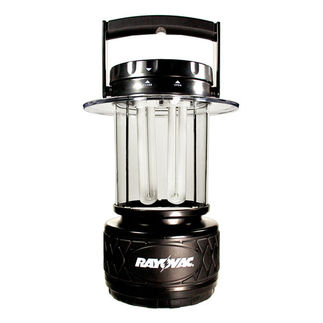
The governor had declared a State of Emergency (which I think in these days of unpredictable and catastrophic weather events is the right thing to do). We filled up the gas tank, got food and cash, and charged up all the battery-operated everythings.

62285_e8f6222962dd0e8a2bafa5638207b74e70f8d4a5_original_x_323.jpg (323×323)Flashlights-91.jpg (1388×1332)Battery-Powered-Plastic-Strapping-Tool.jpg (801×740)

(actually, I have no idea what that last thing is and we definitely don't have one ....)

fellsman2012-01-10.jpg (450×300)We had conversations about whether or not to put up the hurricane panels (over the doors and windows) and at what point we would make the decision to sit tight or head for the hills.

We are originally from New England and we got our share of hurricanes up there too, not to mention ice storms and Nor'easters. And, we are used to the media hype that comes ahead of time: "IT'S HEADING STRAIGHT FOR YOU! YOU'RE ALL GONNA DIE!" followed by "oops! our bad...AND NOW IN OTHER NEWS," when the storm turns out to be a dud.

It's not a secret that my husband does not like storms that involve high winds and heavy torrential downpours (well who does? but he REALLY doesn't like them). When he is worried, he often picks up his paintbrush, and last night while I was at a yoga class he painted this:

Calm Before the Storm
I like how he turns his worry into a work of art...

So we are not the type to be blase when we hear that a storm is coming. Compared to other people we probably over-prepare. We fall into the Better Safe than Sorry category, like this guy:

093-better-safe-than-sorry.jpg (522×522)

marsrover_mer_big.gif (2500×2000)The thing about storms is that they are beyond our control. No matter that there are satellites in the sky and little robotic space thingys wandering around Mars - we still can't control the weather down here on earth.

And you can't be sure about what is the right thing to do. Do we stay put? Do we leave? In fact, in situations like this, I always remember the story of this little house at the foot of a mountain in New Hampshire. An avalanche came down the mountain, heading straight for the house. The people in it ran outside to escape. But the avalanche split and went around the house. The people who had run outside were killed. I think it's true story, but if it's not - well, who cares; it illustrates the point. We can try to keep ourselves safe, but we never really know if we're making the right choice until ... well, until the avalanche either hits us or misses us.

a1f6453b55d3205b9e5cab93265c3c75.jpg (525×343)I'm not sure what this post is about really... It has something to do with weathering storms; with finding balance between obsessive worry and appropriate planning; with riding out the storms with as much grace as possible; with not forgetting to enjoy today's sunshine because we are worrying about tomorrow's rain. At least those are the things I was thinking about when I started it.

We can't escape storms - not the weather ones and not the ones in our lives. We can't have a plan for every possible scenario. Nor should we, because that would mean we are always living in the negative possibility, which of course means we are not enjoying the present moment, in which there is no storm; no avalanche. Still, we can't be foolishly la-de-da either. It's about balance. It doesn't hurt to think about what we might do in this or that situation; how we might handle it. So we are ready for Erika, whether she comes or not. But this afternoon, there is no storm. So we are are going to enjoy the sunshine, read books and watch the ducks and birds on the pond behind our house. They don't seem worried...


Adding a P.S. to this post:

Storm Erika fell apart and headed off in a way that we were barely affected at all. We got perhaps an hour of rain, and that was less than we'd gotten the day before from a random non-Erika-related thunderstorm. We listened to the forecast and ended up just bringing the furniture in off the lanai but didn't put up the panels (which I am glad of because it is a Big Chore and I would want to have put them up for nothing). Today dawned pleasant and now it's overcast but this storm has passed.